CALL NOW
Super bowl sunday and nj dui laws: what to expect at roadside checkpoints
Super Bowl Sunday is one of the most anticipated sporting events of the year, bringing friends and families together across New Jersey to celebrate. However, it is also statistically one of the most dangerous days on the road due to a significant increase in alcohol consumption. Law enforcement agencies throughout the state anticipate this surge and respond with increased patrols and strategic sobriety checkpoints. Understanding how these roadside stops operate and what your legal rights are is essential for any motorist traveling this weekend.
The penalties for driving while intoxicated in New Jersey are severe and can have life-altering consequences for your career, finances, and freedom. If you find yourself facing charges after a holiday weekend stop, contact our firm today by phone or through our online contact form to schedule a confidential consultation. Taking proactive steps to understand the law can help you navigate the complexities of the legal system if an arrest occurs.
NJ DUI Laws: Understanding The Legal Foundation Of Roadside Sobriety Checkpoints
Sobriety checkpoints, often called roadblocks, are a common tool used by New Jersey State Police and local departments during high-traffic events like Super Bowl Sunday. While the Fourth Amendment protects citizens against unreasonable searches and seizures, the courts have ruled that these checkpoints are constitutional under specific conditions. In New Jersey, law enforcement must follow a strict set of administrative guidelines to ensure a checkpoint is legal and not an arbitrary intrusion.
A legal checkpoint must be established by high-level police officials rather than individual officers in the field. There must be a documented reason for choosing a specific location, such as a high history of alcohol-related accidents in that area. Furthermore, the police must provide public notice of the checkpoint, often through local news outlets or social media, and the site must be clearly marked with signs and lighting. These requirements are designed to balance public safety with the constitutional rights of the individual driver.
During a stop, officers typically follow a predetermined mathematical formula for which cars to pull over, such as every third or fifth vehicle. This prevents the police from using subjective profiling to target specific drivers. If the initial interaction gives the officer reasonable suspicion that a driver is impaired, they may then move the driver to a secondary area for further investigation. Understanding these procedural rules is critical, as any deviation by the police could potentially serve as grounds for a legal challenge to the evidence gathered.
New Jersey Roadside Checkpoints: What Happens During An Initial Police Encounter
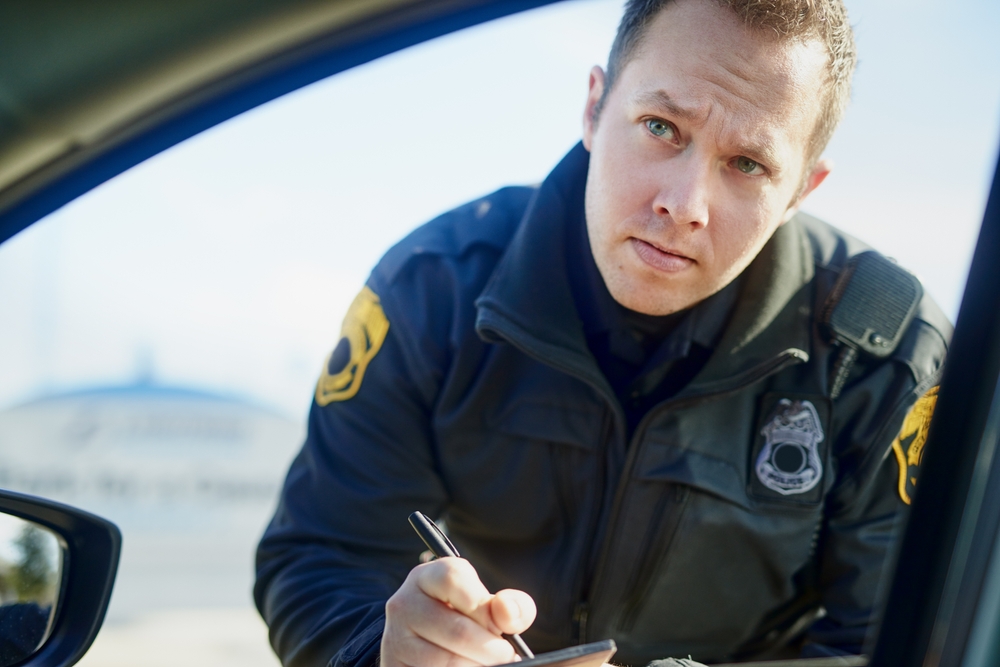
When you approach a sobriety checkpoint on Super Bowl Sunday, you will likely see a significant presence of emergency lights and officers in high-visibility gear. The process begins with a brief stop where an officer will ask for your driver license, registration, and proof of insurance. This initial interaction is designed to allow the officer to look for immediate signs of impairment without conducting a full search or lengthy detention.
Officers are trained to look for specific behavioral and physical cues during this short window of time. These include the smell of alcohol on the breath or in the vehicle, slurred speech, fumbled movements when retrieving documents, or bloodshot and watery eyes. They are also observing the interior of the car for open containers of alcohol or other drug paraphernalia. If you provide your documents calmly and show no signs of intoxication, you are typically allowed to proceed through the checkpoint within a minute or two.
It is important to remain polite and cooperative during this phase of the stop. While you have the right to remain silent, refusing to provide your identification or basic driving documents can lead to immediate complications and potential obstruction charges. The goal of the police at a checkpoint is to identify high-risk drivers efficiently, and a professional demeanor can help ensure your interaction remains brief and routine.
NJ DUI Penalties: Navigating The Financial And Legal Consequences Of A 2026 Conviction
New Jersey has some of the strictest driving while intoxicated laws in the country, and the penalties have only become more rigid in recent years. A conviction is not considered a traditional criminal offense in New Jersey, but it is a serious motor vehicle violation that remains on your driving record permanently. The severity of the punishment depends largely on your blood alcohol concentration level and whether you have prior offenses on your record.
For a first-time offender with a blood alcohol concentration between 0.08 percent and 0.10 percent, the consequences are immediate. You may face a fine of up to four hundred dollars, a three-month license suspension that is usually stayed upon the installation of an ignition interlock device, and mandatory attendance at an Intoxicated Driver Resource Center. Additionally, you will be required to pay an insurance surcharge of one thousand dollars per year for three consecutive years. These costs add up quickly and can place a heavy burden on a household budget.
If your blood alcohol concentration is 0.10 percent or higher, the penalties increase significantly. The fines are higher, and the requirement for an ignition interlock device can last for up to a year after your license is restored. For second and third offenses, the state mandates jail time, multi-year license suspensions, and thousands of dollars in additional fines and surcharges. Knowing what is at stake can help you make better decisions before getting behind the wheel after a Super Bowl party.
Super Bowl Sunday Roadblocks: How Police Detect Impairment Beyond Alcohol
While alcohol is the primary focus of most Super Bowl sobriety checkpoints, law enforcement is increasingly focused on drug-impaired driving as well. With the legalization of recreational cannabis in New Jersey, officers are now specifically trained as Drug Recognition Experts to identify drivers under the influence of various substances. A driver can be charged with a DUI even if their blood alcohol concentration is zero if the officer believes their ability to drive is impaired by drugs.
Drug Recognition Experts use a standardized 12-step evaluation process to determine if a driver is impaired. This includes checking pupil dilation, taking a pulse, and observing physical coordination. Unlike alcohol, there is no simple breath test to determine the exact level of drug impairment, which makes these cases highly dependent on the subjective observations of the arresting officer. This subjectivity can be a key point of contention in a legal defense.
The penalties for driving under the influence of drugs are generally the same as those for alcohol-related offenses. However, the lack of a clear “per se” limit like the 0.08 percent alcohol threshold means the prosecution must prove actual impairment through testimony and physical evidence. If you are stopped at a checkpoint and the officer suspects drug use, they may request a blood or urine sample, which brings additional legal considerations regarding consent and warrants.
Roadside Sobriety Testing: The Role Of Standardized Field Sobriety Tests In NJ
If an officer at a Super Bowl checkpoint believes you may be intoxicated, they will ask you to step out of the vehicle to perform Standardized Field Sobriety Tests. These tests are designed to measure your balance, coordination, and ability to follow multi-task instructions. While they may seem simple, they are often difficult to perform perfectly, especially under the stress of a police encounter and the cold conditions of a New Jersey February night.
The National Highway Traffic Safety Administration has validated three specific tests that are used by officers across the state:
- Horizontal gaze nystagmus: The officer moves a pen or finger in front of your eyes to look for involuntary jerking movements
- Walk and turn: You are asked to walk nine steps in a straight line, heel-to-toe, turn in a specific way, and return
- One leg stand: You must stand on one leg while counting out loud until the officer tells you to stop
It is important to know that these physical tests are technically voluntary in New Jersey. However, refusing to perform them does not necessarily prevent an arrest. The officer can still take you into custody based on other observations like your driving behavior, speech, or the smell of alcohol. If you do choose to perform the tests, any mistakes you make will be documented and used as evidence to establish probable cause for an arrest.
Many factors other than intoxication can cause a person to fail these tests. Physical injuries, inner ear issues, neurological conditions, or even inappropriate footwear can all impact your performance. High winds or uneven pavement at the roadside can also make it nearly impossible to maintain balance. Highlighting these outside factors is a common strategy when challenging the validity of a field sobriety test in court.
New Jersey Implied Consent: What Happens If You Refuse A Breathalyzer Test
Many drivers believe that they can avoid a DUI charge by simply refusing to blow into a breathalyzer. In New Jersey, this is a dangerous misconception due to the Implied Consent Law. By holding a New Jersey driver license and operating a vehicle on public roads, you have already legally consented to submit to a chemical breath test if an officer has probable cause to believe you are driving while intoxicated.
Refusing to provide a breath sample results in an automatic charge of refusal, which carries penalties that are often just as severe as a DUI conviction itself. For a first offense, refusal can lead to a license suspension and the mandatory installation of an ignition interlock device for nine to fifteen months. You will also face the same heavy insurance surcharges and fines associated with a standard DUI. Crucially, the prosecution can often use your refusal as evidence of a guilty conscience in your underlying DUI case.
The police use the Alcotest 9510 or similar devices to measure your blood alcohol concentration. These machines must be properly calibrated and operated by certified officers for the results to be admissible in court. If you refuse the test, the state does not need to prove your exact alcohol level; they only need to prove that the officer had a reasonable basis for the request and that you clearly declined to cooperate. This makes refusal cases particularly difficult to defend without professional legal assistance.
Similar Post: What Happens If You’re Arrested for Underage Drinking at a College Party?
Roadside Checkpoint Rights: How To Handle A Stop On Super Bowl Sunday
If you see the lights of a sobriety checkpoint ahead of you this Super Bowl Sunday, the best approach is to remain calm and follow instructions. While the experience can be intimidating, knowing your rights can help you stay composed. You have the right to remain silent beyond providing your mandatory documents, and you are not required to answer questions about where you have been or how much you have had to drink.
You are also protected against unreasonable searches of your vehicle. Unless the officer sees evidence of a crime in plain view or has probable cause to believe the vehicle contains contraband, they generally need your consent or a warrant to search your trunk or glove compartment. Politely declining a search request is within your rights and does not constitute an admission of guilt.
- Stay in the vehicle: Do not exit your car unless specifically instructed to do so by an officer
- Keep hands visible: Place your hands on the steering wheel so the officer can see you are not a threat
- Provide documents quickly: Have your license and registration ready to avoid looking like you are fumbling
- Be brief but polite: Answer necessary questions concisely without volunteering extra information
- Observe the surroundings: Take note of the checkpoint setup and any interactions that seem unusual
If you are asked to step out for testing, remember that your actions are being recorded. Most patrol cars are equipped with dashcams, and many officers wear body cameras. This footage can be your best defense if the officer’s report does not match what actually happened at the scene. After the encounter is over, try to write down everything you remember about the stop as soon as possible, as these details can fade quickly.
The legality of a checkpoint can often be challenged if the police failed to follow the required administrative protocols. If the checkpoint was not properly publicized or if the officers were not following a consistent neutral formula for stopping cars, the entire stop might be deemed unconstitutional. These procedural defenses are often the most effective way to address charges arising from a roadside roadblock.
Protecting Your Future After A Super Bowl DUI Arrest In New Jersey
An arrest for DUI on Super Bowl Sunday does not have to mean the end of your professional or personal life. While the state is aggressive in its prosecution of these cases, there are many legal avenues for challenging the evidence against you. From questioning the legality of the checkpoint to disputing the accuracy of a breathalyzer reading, a thorough defense requires a detailed examination of every aspect of the stop.
The long-term effects of a conviction go beyond the immediate court-ordered penalties. A DUI on your record can lead to increased insurance premiums for years, difficulties with certain types of employment, and professional licensing issues for doctors, nurses, and commercial drivers. By fighting the charges, you are working to protect your reputation and your long-term financial stability.
At Team Law, we understand the stress and uncertainty that comes with a holiday weekend arrest. Our goal is to provide a clear, factual assessment of your situation and to build a defense strategy that addresses the specific details of your case. Whether it is negotiating for a reduction in charges or taking the case to trial to prove your innocence, we are committed to achieving the best possible outcome for our clients.
Similar Post: What Are the Penalties for DUI in New Jersey?
Charged With Drunk Driving in New Jersey? Call Team Law Today
The hours following an arrest are critical for preserving evidence and building your case. Waiting too long to seek legal guidance can result in the loss of valuable video footage or the expiration of deadlines for filing certain motions. We provide the support and advocacy you need to face the New Jersey court system with confidence.
If you have been stopped at a roadside checkpoint or are facing charges related to Super Bowl Sunday, you do not have to navigate this process alone. The laws in New Jersey are complex, and the system is designed to favor the prosecution. Call us now at 1-800-TEAM-LAW or reach out through our online contact form to speak with an attorney and learn how we can help protect your rights. We represent clients throughout New Jersey, including Clark, West New York, and Jersey City.
Disclaimer: This blog is intended for informational purposes only and does not establish an attorney-client relationship. It should not be considered as legal advice. For personalized legal assistance, please consult our team directly.